
Apple’s Special Event
Apple’s announcement of their October 30 Special Event triggered the usual flood of product speculation. Topping the list of imminet product updates are iPad Pros, MacBooks, and MacBook Airs. Further down one can find the Mac Mini and Mac Pro.
There are a lot of good arguments for one or more of the above. I won’t go into great detail here, in summary much of the line up, especially the Mac Pro, is long overdue for an update and the Mac lineup as a whole has taken a backseat to the revenue generating iPhone.
Though I believe that the new Mac Pro will be announced, the headliner will be a new product altogether: An Augmented Reality Headset.
It is no secret that Apple has been promoting Augmented Reality. Apple first announced ARKit, a framework which allows software developers to write augmented reality programs, at their World Wide Developer’s Conference (WWDC) in June 2017. The iPhone and iPad Pro’s AR capabilities were front and center during WWDC last summer.
While AR is impressive on the iPhone and iPad, it has obvious limitations. The screens on both are relatively small, especially for an AR experience which is best appreciated on a screen which takes up a majority of a person’s field of view. Secondly, it is both limiting and somewhat impracticable to have to experience AR while holding a device in front your face.
An AR headset is the obvious solution to both of these problems. While in San Jose last summer for Apple’s developer conference (wasn’t a ticket holder this year, went for the experience) I became convinced that an AR headset was in the product pipeline. At that time I figured it would be announced at WWDC in 2019. My reasoning was that there were no rumors or speculation of such a device, which made an earlier announcement unlikely and secondly, major product announcements are usually made during June at WWDC. , whereas updates to existing products are made in the fall.
Apple has had an AR headset in their pipeline for years. The AR capabilities of the phone were promoted in large part to bring developers, those who write software for Apple’s platforms, up to speed in the AR frameworks. A little background on this: A framework is a collection of software tools used by those who write programs. These frameworks a give programmers access to certain capabilities of the device. There are frameworks to check location, use the camera, play music, etc. When Apple adds a new capability to their device, especially one they are trying to promote, they also promote the associated frameworks (usually at WWDC). Sometimes certain frameworks are promoted whose immediate purpose is not obvious at the time. We saw this when certain frameworks which ended up being helpful to Apple TV, were released to developers prior to Apple opening up the Apple TV platform. The AR framework is another example. While AR does have some limited use on the iPhone, releasing the AR framework years in advance teaches developers how to wrote software for AR, while at the same time allowing the kinks to be worked out. That way when the hardware is announced, excellent software will soon follow.
My timeline for the AR headset changed once I saw the artwork for Apple’s upcoming event:


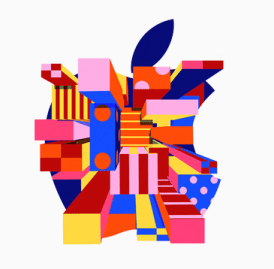


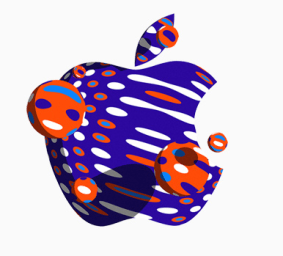
All of these are three dimensional and scream Augmented Reality.
I am still surprised by the timing, this release is earlier than I had anticipated, but I am not surprised by the product itself.
I can’t wait for October 30.
 technologyhealth.io