
Smaller, Safer, Faster
Several weeks ago I had the privilege of attending the North America Spine Society (NASS) meeting in Boston. This meeting is held annually and is the largest gathering of spine surgeons in the world.
It is also the largest gathering in the world of those who sell products to spine surgeons and hospitals. The 516,000 square foot exhibit hall, showcasing the latest technology, is a good window into the spine market.
Fifteen years ago the exhibit hall was filled with things – implants, screws, cages, plates, and so on, all designed to be permanently placed in the patient’s spine. Each company tried to explain that their product was better by pointing out small (and usually meaningless) differences between their product and their competitor’s. Once in a while something novel would appear but as the market matured, this was increasingly rare.
For many years, the products at the booths were no different than they were the year before.
However, things changed, slowly at first, but then quickly. The implants, which used to be front and center, are relegated to a back of the booth – if they are there at all, and have been replaced by “enabling technologies” such as navigation and advanced imaging / planning systems. More recently the talk is all about “robots” a noisy but unscalable and unsustainable solution given the macro dynamics of healthcare. All of these products are by design, intended to ensure that surgeons and hospitals become more and more reliant upon the company and its products much that way IBM and others worked to ensure that their main-frame computer solutions (remember the AS400?) would make corporations reliant on them. Fortunately for the world, this flies in the face of human nature.
This transition from implantable objects to navigation platforms was made possible by advances in technology. Soon large, impressive, expensive navigation platforms were the star of the exhibition show. The platforms were usually comprised of an intraoperative CT scanner, one or more infrared cameras, and a large computer station all of which take up a great deal of real estate in an already crowded OR. Each company that sold a navigation platform also sold an impressive array of proprietary instruments that were needed in order to use these systems. Competitor’s instruments were by design useless.
Due to their cost and complexity, these systems are only available to the richest hospitals in the richest countries. They are also expensive and complex to maintain and use. Though navigation platforms have become somewhat smaller and faster, the changes have been incremental, and today’s platforms are not much different than those from 5 or even 10 years ago.
So where will we be five years from now? Fortunately we have a roadmap. If we look at the progression of the computers and technology in general, we see the following trend: Large main frames to desktop computers to personal computers to laptops and now smartphones. Because of the exponential increase in computing power (see Moore’s Law), performance has not been sacrificed, in fact today’s iPhone is orders of magnitude more powerful than the largest mainframe from years past.
The navigation platforms, (and all enabling technology for that matter) will, like the smartphone, be smaller, more powerful, less expensive and widely available.
Because of this trend, enabling technologies, instead of being the exclusive purview of richest hospitals in the richest countries, will be available to in operating room setting in the US and perhaps more importantly to those outside the US. Smart phones have allowed citizens of third world countries to have access to the internet, banking, and many other previously unavailable services. Likewise, new navigation platforms, powered by smaller, faster, and less expensive computers, such as the iPhone, will give patients throughout the world access to the same level of care as those living in affluent countries.
Bring Back the Music

“Music inspires, it motivates. It’s also the thing at night that helps quiet me. I think it’s better than any medicine.”
-Tim Cook, August, 2018
I agree with Tim Cook, music is that and so much more. It is an integral part of my life as well as my children’s.
Growing up I was fortunate to have access to music, I had a simple radio in my room and later a tape deck. As a teenager, I could get lost in the world of music with a portable radio and headphones and then a Sony Walkman.
Children (and adults) today ironically don’t have a reliable, easy way to get lost in the music. While Apple’s devices certainly provide one with the ability to listen to music, they also burden their owner with an onslaught of distractions – text messages, Snapchat notifications, FaceBook, and on and on.
Even the simplest iOS device, the iPod, inflicts these distractions upon the user.
My children have iPods with music on them. They recently went to summer camp where internet capable devices were prohibited. I went to Amazon, ordered some MP3 players and proceeded to download music. I was successful, but it felt like I was back in 1997.
What if Apple were to make a small, portable music player that – get ready – only played music?
People could listen to their music without the distractions. This would be especially beneficial for children who may not have the self control, or knowledge, needed to disable these distractions. They could take them to camp and have their music. They could be somewhere without the internet (there are still such places) and listen to their music.
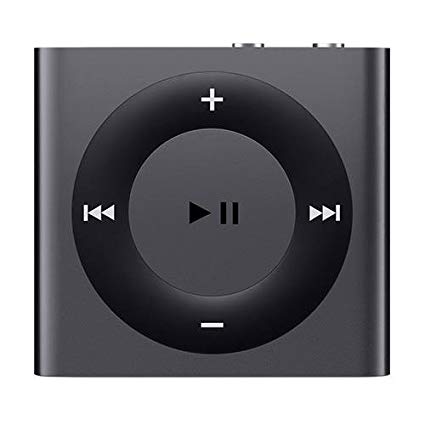
Apple has made such a device, the iPod Shuffle. It played music and did nothing else. It would be easy for Apple to bring this back. It would align with Tim Cook’s philosophy on music and would not cannibalize any device in the current product line.
Bring Back the Music.
Apple’s Special Event
Apple’s announcement of their October 30 Special Event triggered the usual flood of product speculation. Topping the list of imminet product updates are iPad Pros, MacBooks, and MacBook Airs. Further down one can find the Mac Mini and Mac Pro.
There are a lot of good arguments for one or more of the above. I won’t go into great detail here, in summary much of the line up, especially the Mac Pro, is long overdue for an update and the Mac lineup as a whole has taken a backseat to the revenue generating iPhone.
Though I believe that the new Mac Pro will be announced, the headliner will be a new product altogether: An Augmented Reality Headset.
It is no secret that Apple has been promoting Augmented Reality. Apple first announced ARKit, a framework which allows software developers to write augmented reality programs, at their World Wide Developer’s Conference (WWDC) in June 2017. The iPhone and iPad Pro’s AR capabilities were front and center during WWDC last summer.
While AR is impressive on the iPhone and iPad, it has obvious limitations. The screens on both are relatively small, especially for an AR experience which is best appreciated on a screen which takes up a majority of a person’s field of view. Secondly, it is both limiting and somewhat impracticable to have to experience AR while holding a device in front your face.
An AR headset is the obvious solution to both of these problems. While in San Jose last summer for Apple’s developer conference (wasn’t a ticket holder this year, went for the experience) I became convinced that an AR headset was in the product pipeline. At that time I figured it would be announced at WWDC in 2019. My reasoning was that there were no rumors or speculation of such a device, which made an earlier announcement unlikely and secondly, major product announcements are usually made during June at WWDC. , whereas updates to existing products are made in the fall.
Apple has had an AR headset in their pipeline for years. The AR capabilities of the phone were promoted in large part to bring developers, those who write software for Apple’s platforms, up to speed in the AR frameworks. A little background on this: A framework is a collection of software tools used by those who write programs. These frameworks a give programmers access to certain capabilities of the device. There are frameworks to check location, use the camera, play music, etc. When Apple adds a new capability to their device, especially one they are trying to promote, they also promote the associated frameworks (usually at WWDC). Sometimes certain frameworks are promoted whose immediate purpose is not obvious at the time. We saw this when certain frameworks which ended up being helpful to Apple TV, were released to developers prior to Apple opening up the Apple TV platform. The AR framework is another example. While AR does have some limited use on the iPhone, releasing the AR framework years in advance teaches developers how to wrote software for AR, while at the same time allowing the kinks to be worked out. That way when the hardware is announced, excellent software will soon follow.
My timeline for the AR headset changed once I saw the artwork for Apple’s upcoming event:


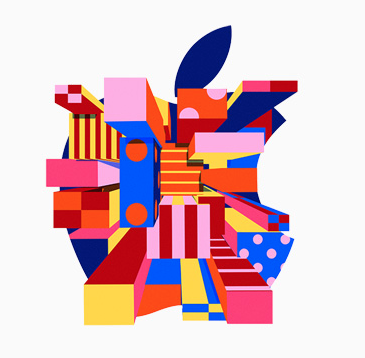


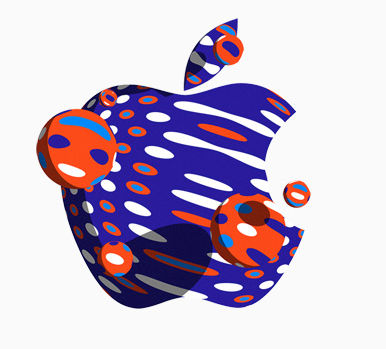
All of these are three dimensional and scream Augmented Reality.
I am still surprised by the timing, this release is earlier than I had anticipated, but I am not surprised by the product itself.
I can’t wait for October 30.
Welcome to Technology Health
Welcome to my new blog, Technology Health.
Like the title suggests, I plan to write about technology, health, and sometimes both at once.
I have interests in both and the two are becoming more intertwined.
If it feels too easy, you’re not trying hard enough. — Tony Fadell
 technologyhealth.io